
What Northern Michigan Snowbirds Should Know About Ice Dams Before Heading South

The Reality
What May Be Forming at the Roofline While You're in Florida
You have spent years heading south when the leaves drop.
You know the drill — lock up your Northern Michigan home, set the thermostat to say 50 or 55, say goodbye to the lake for a few months.
Maybe you ask Carol next door to keep an eye on things.
What you may not have thought much about is what happens up on the roof after the first heavy snow.
Not the drama of a collapsed ridge or a broken branch — something quieter than that. Something that can work on your home for weeks or months before it announces itself.
Ice dams are common in Northern Michigan winters.
Most homeowners who experience water damage from them do not know it happened until spring, when the staining on the ceiling is already dry and the drywall has already softened.
That is the kind of thing that goes unnoticed when the home is unoccupied.
What is an Ice Dam
An ice dam forms at the lower edge of your roof — usually along the gutters — when heat escapes through your attic and warms the snow above it.
That snow melts, runs down the slope and refreezes when it hits the colder edge of the roof that overhangs the exterior walls.
Over time, that frozen ridge grows. Water backs up behind it. And water that cannot drain forward looks for another way to go.
It finds it — through shingles, under flashing, into the roof deck, and eventually into the walls or ceiling below.
The damage is not always dramatic.
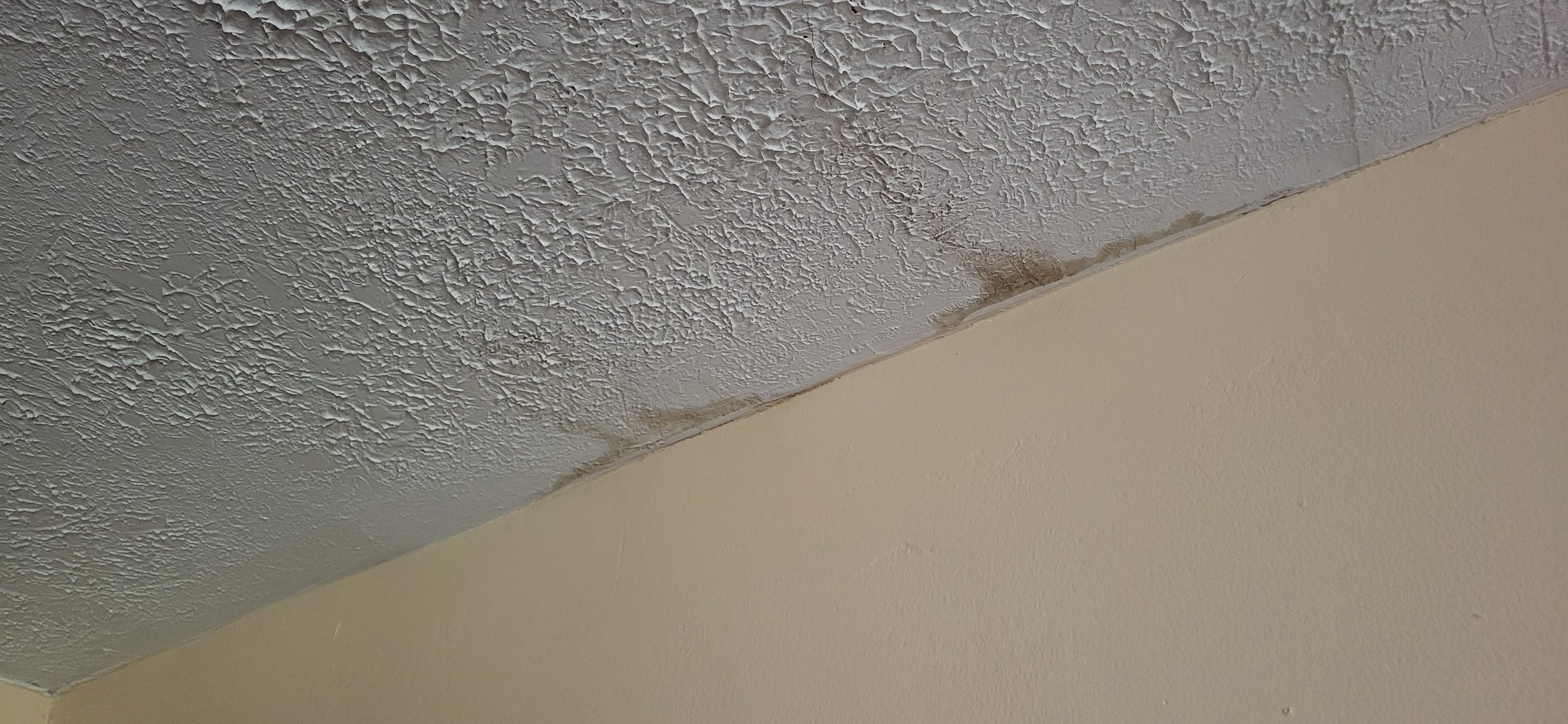
It can be a faint watermark on the drywall above a bedroom window.
A soft spot near an exterior wall.
A smell that is hard to place.
The kind of thing that does not look like much until you pull back the surface and find out how long the moisture has been sitting there.
A Documented Visit Tells You What Your Security Camera Can't
Why Snowbirds and Frequent Travelers Are in a Particularly Difficult Spot
If you are in Florida from November through April, you are not going to notice a ceiling stain in February.
You are not going to catch the soft spot before it becomes a repair job.
You are not going to know that the ice along the back roofline has been building for three weeks straight.
Your neighbor Carol might drive by. But driving by is not the same as walking through.
The conditions that create ice dams — a string of cold days, heavy snowfall, inadequate attic insulation or ventilation — are not unusual in a Northern Michigan winter.
They happen.
The question is whether anyone notices while there is still something to be done, or whether you find out in May.
What Can Actually Be Done About It
There are things worth doing before you leave that reduce the risk:
Improving attic insulation to minimize heat loss
Keep gutters clear of debris
Make sure your roof is in solid condition going into winter.
A conversation with a roofing contractor or insulation professional before the season is reasonable if you have had issues in the past.
Once you are gone, the practical question is whether anyone is paying attention.
A Home Watch visit is not a roofing inspection.
It is not going to diagnose your attic ventilation.
But it can notice the obvious things — ice buildup along the rooflines, icicle patterns that suggest heat loss, and most importantly, conditions inside the home that suggest something has gotten in.
Ceiling staining.
Watermarks near exterior walls.
Unusual moisture or odor in rooms along the roofline.
Those are the signs that show up before the situation becomes expensive. They are also the things that disappear from view when no one is walking through your home on a regular basis.
One Way to Think About It
You cannot prevent every Northern Michigan winter from doing what Northern Michigan winters do. Ice, snow and cold are part of the deal up here.
What you can control is whether anyone is paying attention while you are away. That is not a guarantee of anything. But it is a lot better than finding out in the spring.