
Fall Closing Guide for Your Northern Michigan Home
Before You Lock the Door for Winter
There’s a point every fall when you realize your last weekend at the lake is probably here, or you’re soon getting ready to head South for the winter and leave your snowy Northern Michigan home until next spring.
The boat is coming out.
The leaves are piling up.
The weather is getting colder.
And you’ve got one more list of things to take care of before you lock the door and leave for several weeks or months.
It’s tempting to rush through it.
Don’t.
A good fall closing is less about doing a hundred things perfectly and more about making sure the important things have been considered before your Northern Michigan home sits unoccupied for the winter.
Here are some of the things worth putting on your list.
Start Outside
Your last walk around the property should be more than a quick look from the driveway.
Start with the things that will be exposed to Northern Michigan weather all winter.
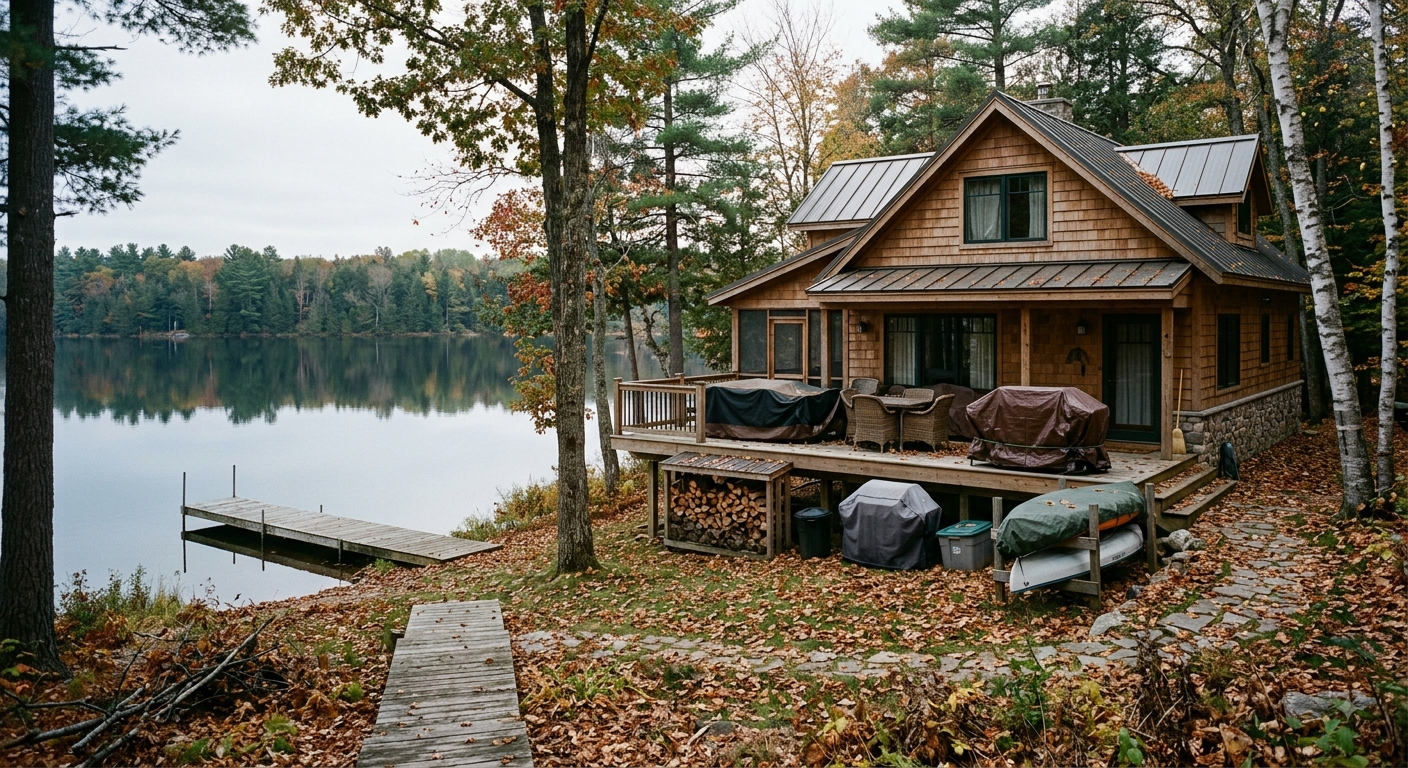
Secure or store loose outdoor furniture, grills and other items that could move in high winds. Remove garden hoses from exterior spigots and make sure those spigots are properly prepared for freezing temperatures.
If you have an irrigation system, make sure it has been properly shut down and the lines addressed for winter.
Then look up.
Check the gutters and downspouts. Look at the roof for anything that needs attention. Take a look at trees and overhanging limbs that could become a problem with heavy snow or high winds.
If snow removal will be needed, make sure you've arranged for it. Driveway markers can also be helpful once the snow arrives.
And if you have a lake home, don't forget the things that make it a lake home.
Boats, lifts, docks, outdoor furniture and seasonal equipment all need their own closing plan. Seems obvious…but you never know. Things can get missed.
Your property is different from the one next door. Your checklist should be, too.
Water and Heat Deserve Extra Attention
This is probably the part of the closing process where you want to slow down.
Water and freezing temperatures can create problems quickly.
Your seasonal plan may include shutting off the home's primary water supply, but that's not necessarily appropriate for every property. Some systems, including certain boilers or fire sprinkler systems, may require a constant water supply. If you're unsure, confirm the situation with a qualified technician.
Your heating system deserves attention, too.
Make sure it's set appropriately for a home that will be unoccupied. Check the furnace filter or humidifier pad if applicable. Consider freeze and water sensors if you don't already have them.
And don't forget the sump pump. Make sure it is working properly before you leave.
These aren't complicated things.
They're just easy to overlook when you're thinking about getting on the road.
Walk Through the House One More Time
Before you leave, walk through the house room by room.
Look for anything that doesn't seem right.
Check toilets to make sure they stop running properly. Look around sinks and visible plumbing connections. If cabinets are against exterior walls, consider leaving them open so warmer air can reach the pipes.
Check your refrigerator and remove perishables. If you have a refrigerator in an unheated garage, think about whether it is appropriate to leave it operating through the winter.
Look at your windows and doors.
Make sure everything is secure.
And don't forget the small things. Replace batteries or bulbs that need attention. Disconnect electronics that don't need to remain powered. Take out the trash. Move sensitive electronics or batteries out of an unheated garage or shed.
None of these tasks are particularly difficult.
The problem is remembering all of them.
Make Sure the House Doesn't Look Like You’re Away
Once you leave, the property is going to look different.
Especially after the leaves fall and the snow arrives.
Make sure your alarm monitoring company has current emergency contacts. Set your light timers. Double-check doors and windows. Arrange for mail and newspaper delivery and have a plan for packages.
If your cameras or other connected devices depend on your internet connection, have a plan for what happens if the router loses connection.
And there's one simple security reminder that's easy to overlook:
Be careful about announcing that you're away.
Consider avoiding sharing travel plans or vacation photos on social media until after you've returned.
Don't Forget the People Who Keep the Property Running
Your home may have several people involved in keeping things running while you're away.
Lawn care.
Snow removal.
Cleaning.
Heating and cooling.
Plumbing.
Other maintenance services.
Before you leave, make sure everyone who needs to know understands the seasonal schedule.
If you're leaving a vehicle at the property, think about its long-term care, too. A battery maintainer may be worth considering, along with any other manufacturer-specific requirements for long-term storage.
And if you're unsure about a particular system, ask the appropriate licensed professional.
Your home is unique. Your winterization plan should be, too.
What About Your Insurance Requirements?
This is another item that's easy to put off.
Take a look at your homeowners insurance policy before you leave.
Your policy may have specific requirements regarding how long a home can be unoccupied and what steps you need to take while you're away. It's also worth reviewing those occupancy requirements and asking your insurance professional whether your Home Watch arrangements satisfy any applicable requirements.
If you have questions, talk with your insurance professional.
That's a conversation worth having before winter rather than after a problem occurs.
You Don't Have to Remember Everything
That's why I created the Daymark Home Watch 47-Point Seasonal Departure Checklist.
It gives you one place to work through the things that are easy to forget when you're closing your Northern Michigan home for the season.
Exterior maintenance.
Interior systems.
Home security.
General departure tasks.
It's not intended to replace the advice of a licensed professional for systems that require specialized knowledge. It's a practical way to make sure all areas of your home have been considered before you leave.

A Checklist Helps
Download the Free 47-Point Seasonal Departure Checklist
Keep it with your fall closing routine and update it as you learn what is specific to your home.
Because every Northern Michigan home has its own unique set of requirements.
Closing the Home Is Only the Beginning
There's one other thing worth thinking about.
What happens after you leave?
You can do a very good job closing your lake home and still have something happen in January.
A storm can damage something outside. A heating system can develop a problem. A pipe can leak. A power outage can affect the property. A pest can find its way inside.
That's where Home Watch is different from simply closing the house.
Daymark provides scheduled interior and exterior visits while you're away, looking for obvious signs of leaks, damage, intrusion, pests, temperature concerns and other unusual conditions. Visits are documented with photos, notes and reporting so you know what was observed.
And when something needs attention, Daymark can communicate the concern and coordinate access for approved vendors when appropriate.
The fall closing gets your home ready for winter.
A scheduled Home Watch plan helps you stay informed about what happens after you've left.