
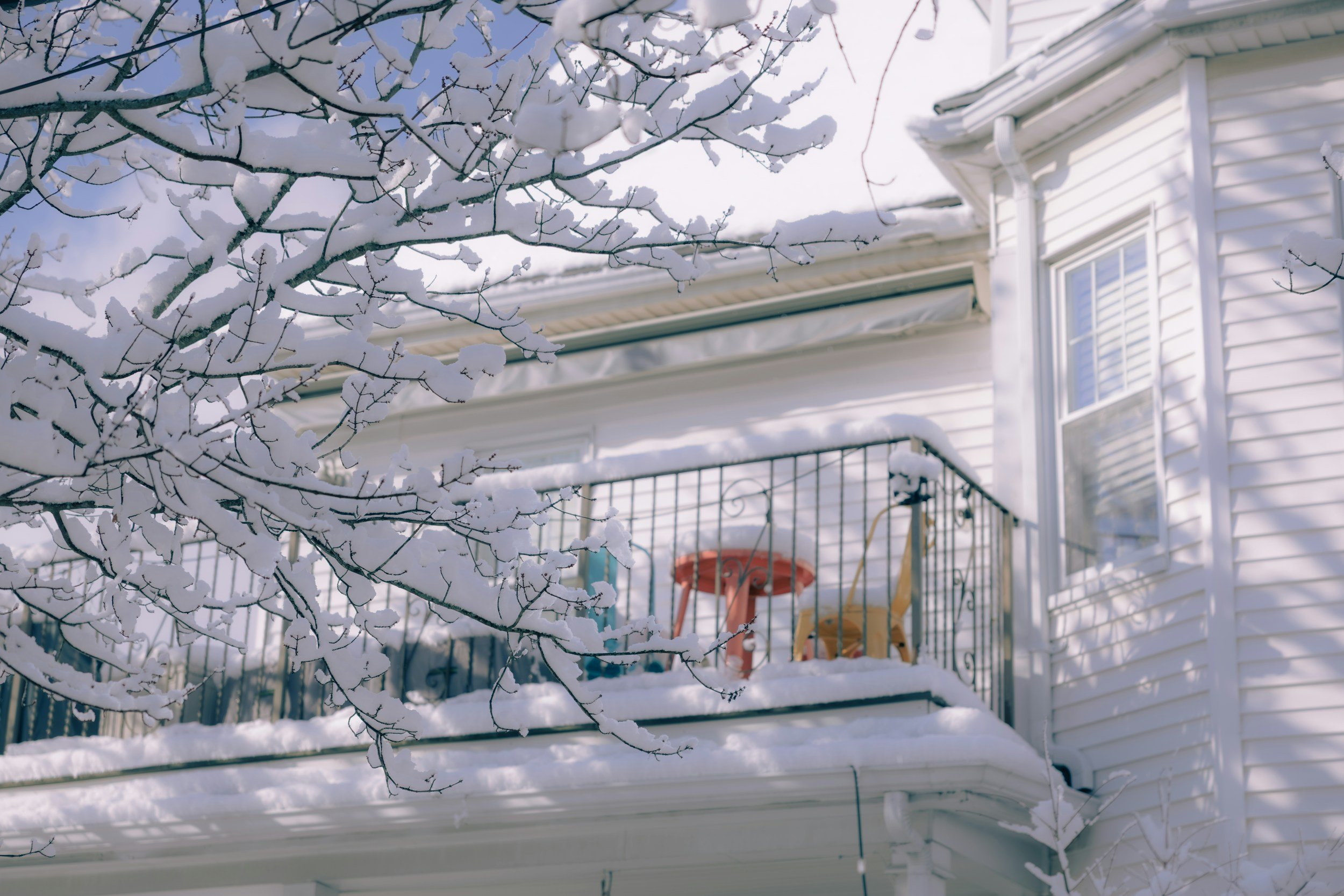
Winter Changes What Your Home Needs While You're Away
If you're leaving your Northern Michigan home for several weeks or several months, winter brings a different set of questions than summer does.
How often should someone check the house?
What should they actually be looking for?
Is a smart thermostat enough?
Should the water be left on?
And what happens if something goes wrong while you're hundreds of miles away?
Those are good questions. And there isn't one answer that fits every property.
How often should my home be checked during winter?
There isn't a magic number of days that works for every home.
The right interval depends on the property, the systems in it, the weather exposure, how long you'll be gone and what your insurance carrier requires.
At Daymark, weekly visits are common for seasonal homes during winter. Some properties may make sense for every-other-week visits when the home has strong systems in place and the owner is comfortable with the longer interval.
The important point is that the schedule should make sense for your particular property rather than simply being a number someone picked out of the air.
What does a winter Home Watch visit actually look for?
A winter visit is more than checking whether the front door is locked.
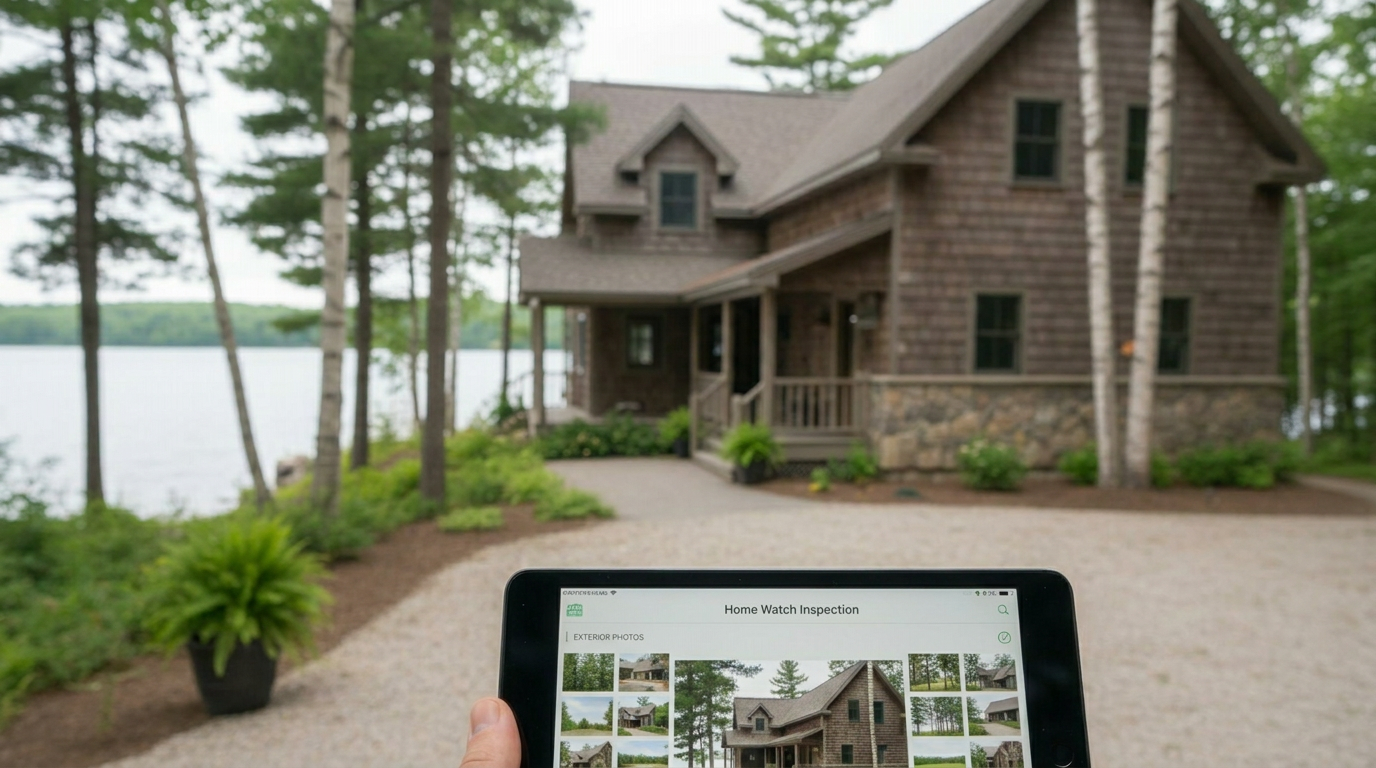
A scheduled Home Watch visit is a visual inspection looking for obvious issues. That can include signs of water intrusion, heating or temperature concerns, power interruptions, storm damage, unusual odors, pest activity, forced entry or other changes that don't belong.
Outside, conditions around the home matter too. Snow, ice, downed branches, blocked access and other changes can tell you something about what has happened since the last visit.
The exact things reviewed vary with the property, season and your instructions. The point is not to diagnose every possible problem. It's to notice something that appears wrong, document what was observed and communicate it clearly.
What temperature should I set the house for?
This is one area where you should be careful about treating a single number as a universal rule.
Travelers recommends keeping a home at 55°F or above when you are away to help reduce the chance of pipes freezing. State Farm gives similar guidance for an unoccupied home.
The Insurance Information Institute, however, recommends a minimum of 65°F during severe cold because temperatures inside wall cavities can be substantially colder than the room itself. That's an important distinction.
65 might be too much. State Farm insurance recommends a thermostat setting of no lower than 55°F when leaving a home and discusses shutting off and draining water systems.
If you're dealing with ordinary winter conditions, one set of guidance may apply.
During sustained severe cold, the conversation can change. Your home's construction, plumbing layout, insulation, heating system and location all matter.
Your insurance policy matters too. If your carrier has a specific requirement, follow that requirement and confirm it directly with your insurer.
Should I shut the water off for the winter?
Sometimes.
Some homes are winterized with the water shut off and the plumbing drained. Others remain heated with the water system operating. Still some others, have the water systems on, but the pump turned off.
There is no one-size-fits-all answer because the home's plumbing, heating system, sprinkler system and winterization plan all matter.
If your water remains on, that makes regular observation more important. A small leak that would be inconvenient to deal with when you're home can become a very different problem when nobody is there to notice it.
Can cameras and smart-home devices replace Home Watch?
They are useful, but they don't see everything…or smell or feel everything.
A camera can show you what is happening within its field of view.
A smart thermostat can tell you the temperature.
A leak sensor can alert you to water in the location where the sensor is installed.
But technology can miss things outside its range. A physical visit may reveal an unusual odor, a door that didn't latch, storm damage, animal activity or a problem in an area where you don't have a sensor.
The all work well together. Technology can provide alerts between visits, while an in-person Home Watch visit provides another set of eyes on the actual property.
What if there's a power outage or storm while I'm away?
That's when having someone local can become particularly useful.
A regular Home Watch visit, or an Emergency Storm Check service can document the condition of the property after an event. Daymark also provides storm, outage and emergency property checks when needed.
The important thing is knowing what actually happened rather than trying to determine the condition of your home from hundreds of miles away.
If something appears wrong, the visit should produce useful information: photos, written observations and a clear communication about what was seen. If the issue requires a licensed trade or other qualified professional, that distinction should remain clear.
Isn't this something a neighbor can do?
A good neighbor can be an important part of your property's protection.
There's a difference between asking someone to “take a look” and having a scheduled, documented service with a defined responsibility, that is insured, bonded, accredited, certified and accountable.
With a professional Home Watch visit, you aren't depending entirely on someone's memory, availability or willingness to drive over during a difficult winter day. The visit is scheduled. What is observed is documented. And you receive a report.
That's particularly valuable when you're managing the property from another state.
So what is winter Home Watch really giving me?
At its simplest, it's information. Information = Peace of Mind.
You may already have a thermostat, cameras, an alarm system, a neighbor and a good winterization plan. Those are all useful.
What Home Watch adds is a person physically going to the property on a scheduled basis, looking at what is actually there and documenting what was observed.
That doesn't mean every problem will be found or every problem can be prevented. It means you're less dependent on assumptions when you can't be there yourself.
And in Northern Michigan winter, having current information about your home is a lot better than wondering.
Home Watch
At Daymark, the standard is simple:
Show Up.
Pay Attention.
Document Clearly.
Communicate Reliably.